
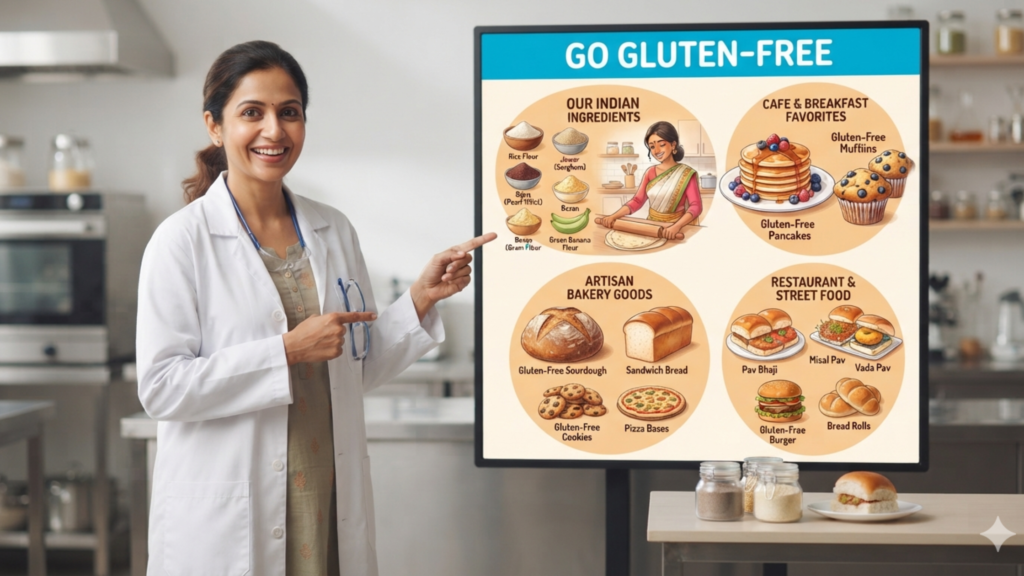
Gluten-Free diet for Indian families is becoming increasingly relevant as more people focus on healthy eating and lifestyle diseases. Whether it is diabetes, gluten intolerance, or simple weight management, understanding gluten-free food choices can help families make better daily decisions.
What Does Gluten-Free Mean?
A Gluten-Free diet begins with understanding gluten. Gluten is a protein found in wheat, maida, barley, and rye. It is commonly present in foods like chapati, bread, biscuits, and bakery items.
For people with celiac disease or gluten sensitivity, consuming gluten can cause digestive discomfort, inflammation, and long-term health issues. That is why following a Gluten-Free diet can be essential for certain individuals.
Why Indian Families Are Shifting to Gluten-Free
Today, many households are exploring a Gluten-Free diet not just for medical reasons but also for overall wellness.
- Rising cases of diabetes and obesity
- Increased awareness of clean eating
- Demand for healthier snacking options
- Lifestyle changes and urban food habits
A Gluten-Free diet helps replace refined flour-based foods with better alternatives without compromising taste.
Common Gluten-Free Foods in India
A practical Gluten-Free diet includes many naturally available Indian ingredients:
- Rice and rice flour
- Jowar (sorghum)
- Bajra (pearl millet)
- Ragi (finger millet)
- Besan (gram flour)
Using these ingredients, families can enjoy gluten-free versions of daily meals.
Gluten-Free Bakery Options
One important aspect of a Gluten-Free diet for Indian families is replacing regular bakery items with healthier alternatives.
Today, you can find:
- Gluten-free pizza bases
- Gluten-free pav and breads
- Gluten-free muffins and pancakes
- Gluten-free sourdough options
These products allow families to satisfy cravings while staying aligned with health goals. A Gluten-Free diet ensures that taste and health go hand in hand.
Benefits for Health-Conscious Consumers
Following a Gluten-Free diet can offer several benefits:
- Better digestion for sensitive individuals
- Controlled blood sugar levels (important for diabetics)
- Reduced bloating and fatigue
- Support in weight management
However, it is important to maintain balanced nutrition while adopting a Gluten-Free diet for Indian families.
Addressing Common Concerns
Many people hesitate to follow a Gluten-Free diet due to concerns:
- “Will it be expensive?”
- “Will the taste be compromised?”
- “Is it difficult to find?”
The reality is changing. With growing demand, gluten-free products are becoming more accessible and competitively priced. A well-planned Gluten-Free diet can be both affordable and enjoyable.
Opportunity for HoReCa Businesses
A Gluten-Free diet is not just useful for consumers but also for hotels, restaurants, and cafes.
HoReCa players can benefit by:
- Catering to health-conscious and diabetic customers
- Expanding their customer base
- Increasing repeat orders and brand loyalty
- Offering premium menu options
By adopting a Gluten-Free diet, restaurants can differentiate themselves in a competitive market.
Solving Sourcing Challenges
One major challenge for HoReCa businesses is sourcing consistent quality products. A Gluten-Free diet also highlights the importance of reliable suppliers.
Solutions include:
- Partnering with specialized gluten-free product suppliers
- Using standardized premixes for consistency
- Ensuring quality certifications and hygiene
This makes it easier to integrate gluten-free items into menus without operational complications.
Final Thought
A Gluten-Free diet for Indian families is not just a trend but a practical step towards healthier living. With the right choices, both families and businesses can benefit from better nutrition, improved health, and growing market demand.