cost vs import margins canva

The Investor’s Guide to Local Fertilizer Manufacturing in Kenya: Costs vs. Import Margins

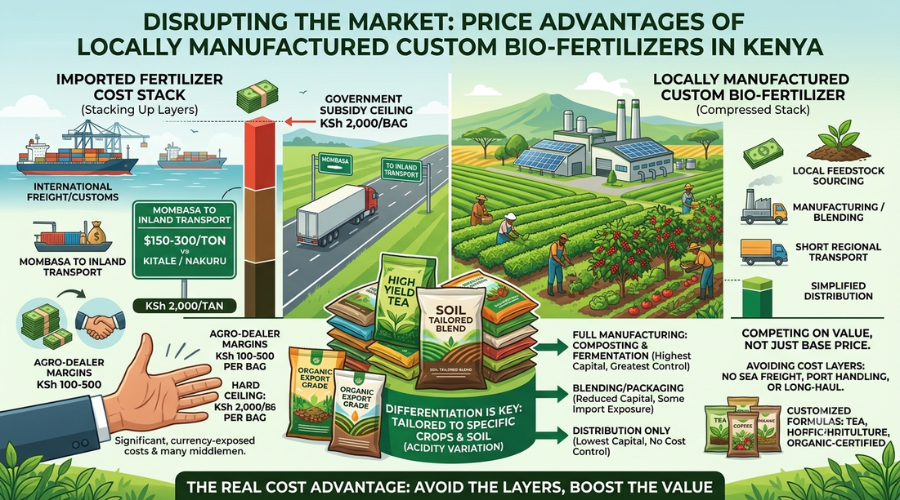
Kenya’s fertilizer market is heavily import-dependent, but local fertilizer manufacturing in Kenya carries a fundamentally different cost structure than importing finished product — one that investors must model carefully before choosing a business model. Kenya’s import dependence today Kenya imported approximately 657,730 metric tonnes of fertilizer in 2022, with the value of fertilizer imports reaching […]

The Investor’s Guide to Local Fertilizer Manufacturing in Kenya: Costs vs. Import Margins Read More »

Indian machinery vs European machinery for Kenya factory

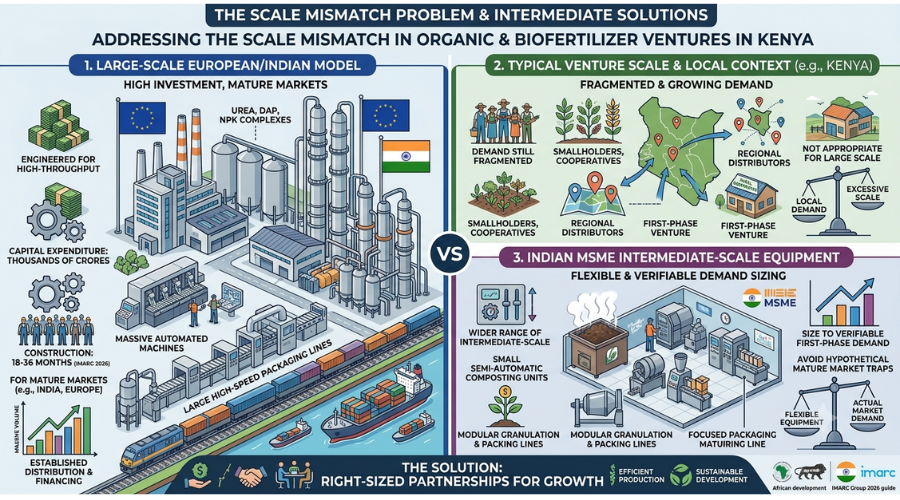
Indian MSME Tech vs. European Machinery: Finding the Right Scale for Kenyan Agribusiness Factories

Kenyan investors setting up an organic fertilizer or biofertilizer facility face a genuine equipment decision: Indian machinery vs. European machinery for a Kenya-based factory. The right answer depends less on brand reputation and more on matching plant scale, automation level, and capital outlay to actual local feedstock volumes and market demand. The scale mismatch problem

Indian MSME Tech vs. European Machinery: Finding the Right Scale for Kenyan Agribusiness Factories Read More »

customizing the formula

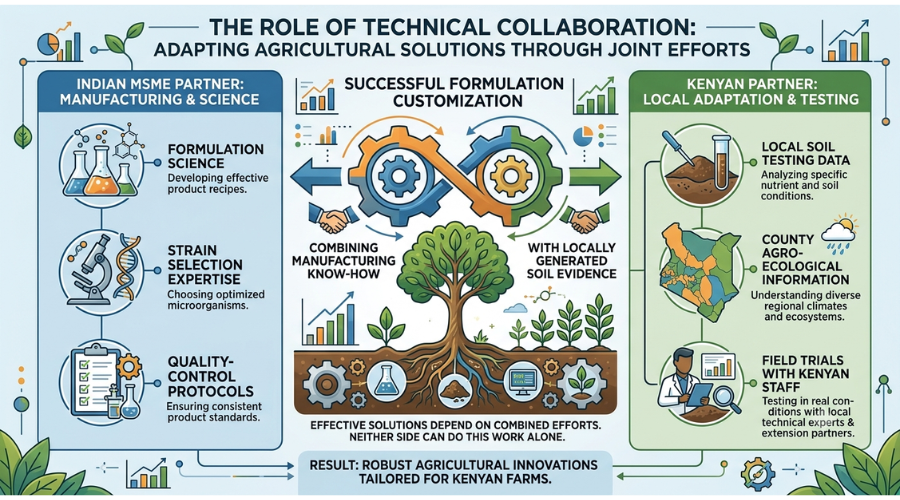
Customizing fertilizer Formula: How Technical Partners Adapt Fertilizer Recipes for Kenyan Soil Variations

A single fertilizer or biofertilizer formula rarely works across all of Kenya. Customizing the fertilizer formula for Kenyan soil conditions — rather than importing a one-size-fits-all recipe — is one of the most important technical contributions an experienced manufacturing partner can bring to a local joint venture. Kenya’s soil variation is significant and well-documented Kenya’s

Customizing fertilizer Formula: How Technical Partners Adapt Fertilizer Recipes for Kenyan Soil Variations Read More »

kenya bio fertilizer Bio-Fertilizer Factory Commissioning Timeline Kenya

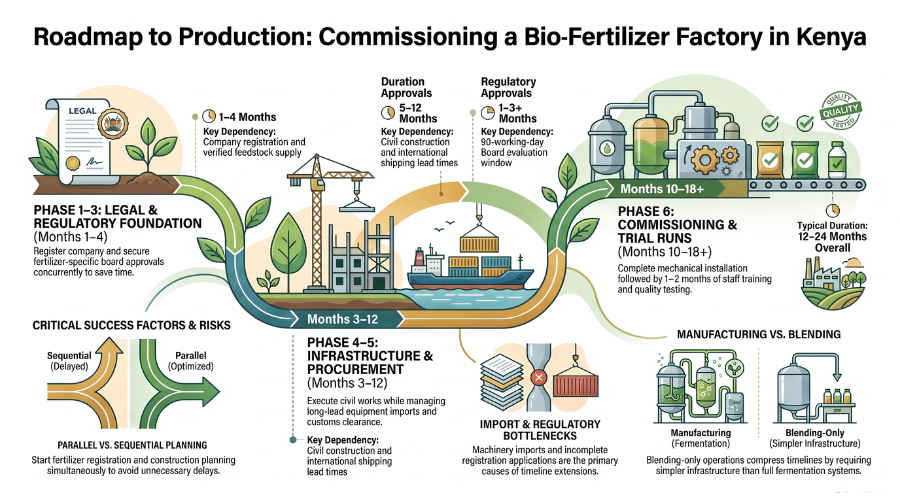
Step-By-Step Blueprint: The Timeline of Commissioning a Bio-Fertilizer Factory in Kenya

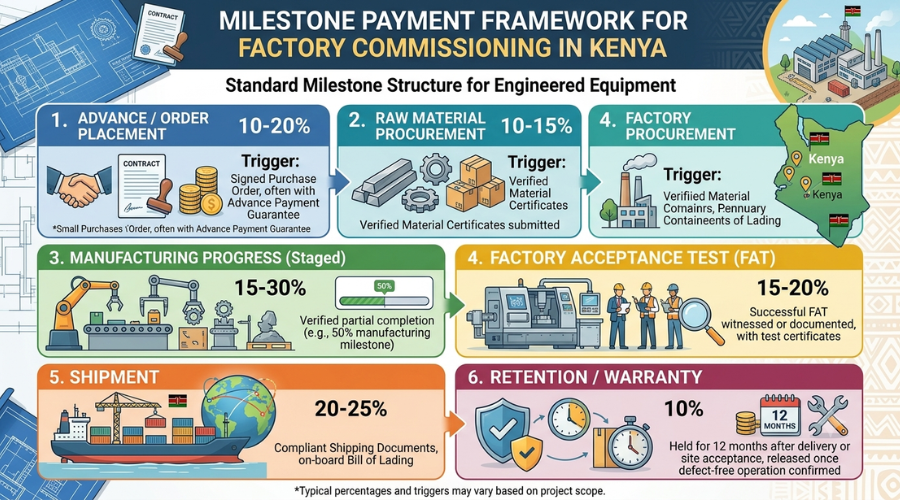
Investors evaluating a Kenyan bio-fertilizer venture need a realistic bio-fertilizer factory commissioning timeline, not an optimistic best-case estimate. Based on general industry benchmarks for organic fertilizer production lines and Kenya-specific registration data, a phased setup typically spans 12–24 months from planning to commercial output — longer than many first-time investors expect. Phase 1: Company registration

Step-By-Step Blueprint: The Timeline of Commissioning a Bio-Fertilizer Factory in Kenya Read More »

fertilizr feasibility roadmap

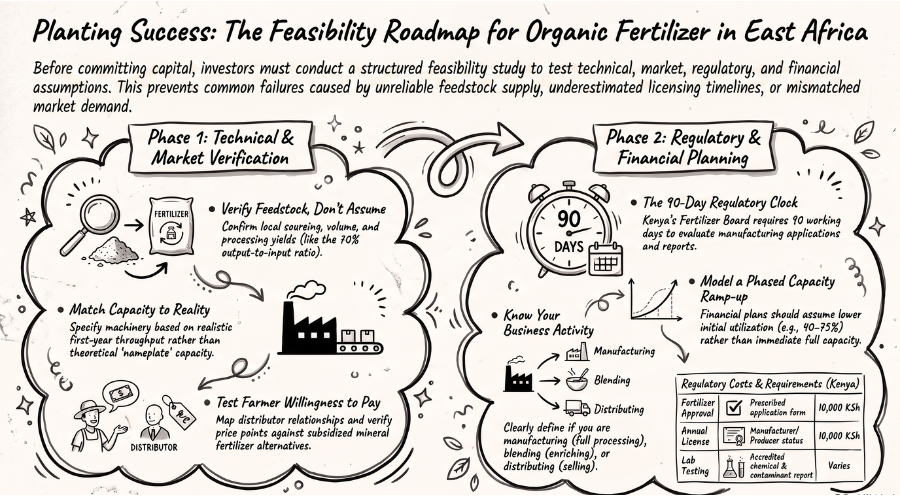
How to Conduct a Comprehensive Feasibility Study for an Organic Fertilizer Plant in East Africa

Before committing capital to a manufacturing facility, every serious investor needs a structured feasibility study for an organic fertilizer plant in East Africa — one that tests technical, market, regulatory and financial assumptions before, not after, equipment is purchased. Why feasibility work comes before machinery selection A feasibility study is a systematic assessment covering management,

How to Conduct a Comprehensive Feasibility Study for an Organic Fertilizer Plant in East Africa Read More »

from importing to manufacturing canva

Protecting Margins: Why Kenyan Agri-Distributors Are Shifting from Importing to Joint-Venture Manufacturing

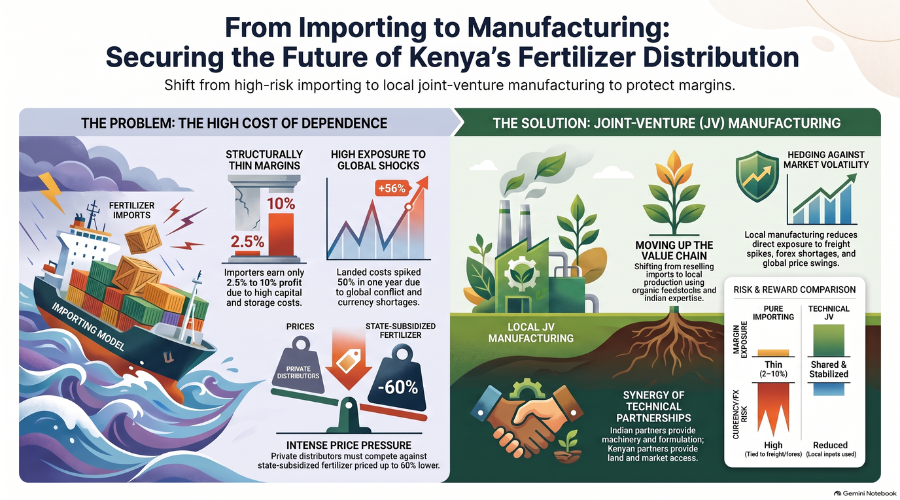
Kenyan fertilizer distributors have long operated on thin margins within an import-dependent supply chain. As currency pressure, freight costs, and subsidy-driven price competition compress those margins further, a growing number are evaluating the shift from importing to joint-venture manufacturing as a more durable business model. Why import margins are structurally thin Independent market analysis shows

Protecting Margins: Why Kenyan Agri-Distributors Are Shifting from Importing to Joint-Venture Manufacturing Read More »

Navigating Kenyan Manufacturing Policies: Incentives for Local Bio-Fertilizer Investors

Kenya offers a defined set of manufacturing incentives for investors, but bio-fertilizer projects must also clear a separate, product-specific registration process. Understanding both tracks — general investment incentives and sector-specific fertilizer regulation — is essential before committing capital. General manufacturing incentives available in Kenya Kenya’s incentive framework operates on two levels: incentives available to any

Navigating Kenyan Manufacturing Policies: Incentives for Local Bio-Fertilizer Investors Read More »

waste to fertilizer venture canva

Turning Agro-Waste into Gold: How Indian Processing Machinery Solves Kenya’s Organic Waste Challenge?

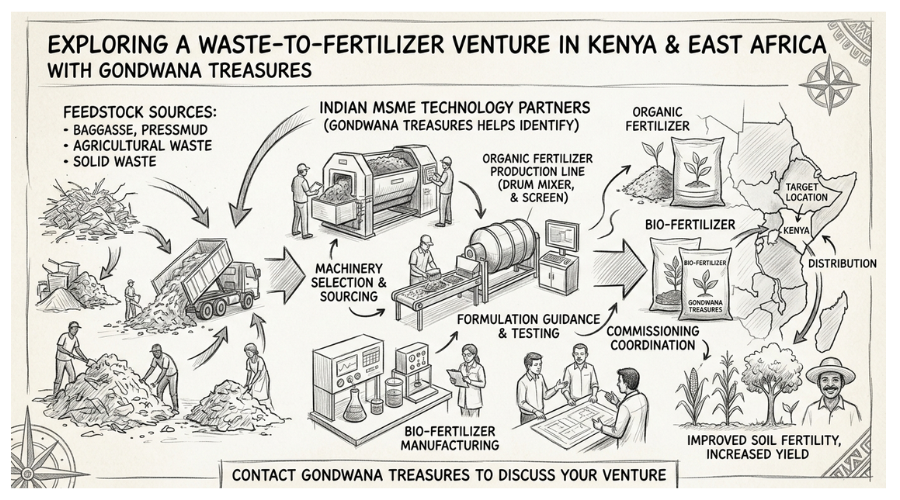
Kenya generates a large, largely unmanaged organic waste stream every year — and most of it never reaches a farm as usable fertilizer. Closing this gap requires the right agro-waste processing machinery, not just goodwill about “waste-to-value.” The scale of Kenya’s organic waste problem Kenya generates approximately 5.72 million tons of organic waste annually across

Turning Agro-Waste into Gold: How Indian Processing Machinery Solves Kenya’s Organic Waste Challenge? Read More »

india africa joint venture

Exporting from Kenya : How a Local Bio-Fertilizer Plant Can Supply the East African Community

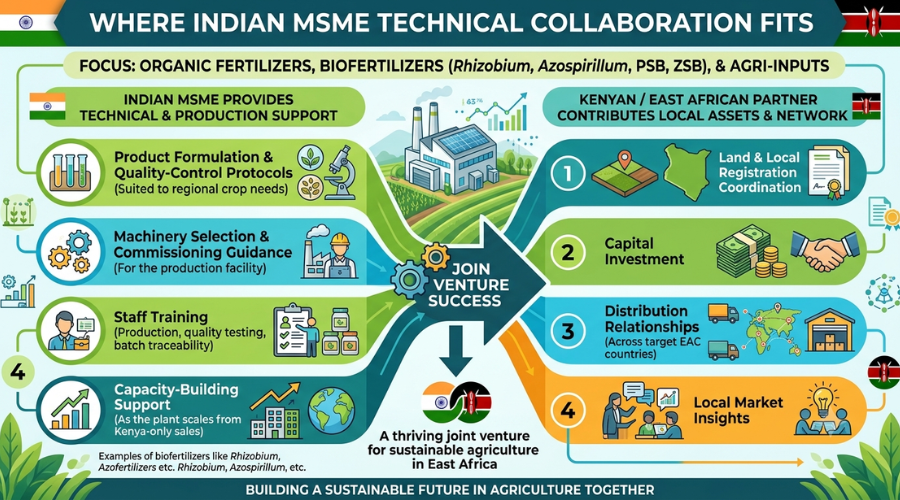
A well-positioned bio-fertilizer plant in Kenya is not limited to serving Kenyan farmers alone. Kenya’s location, port access and status as an East African Community (EAC) member state gives it a structural advantage for supplying Uganda, Tanzania, Rwanda, Burundi and South Sudan — provided the regulatory and logistics groundwork is done correctly. Why Kenya is

Exporting from Kenya : How a Local Bio-Fertilizer Plant Can Supply the East African Community Read More »

gluten free options create loyal brand advocates

Small Segment, Big Impact : How Gluten-Free Options Create Loyal Brand Advocates

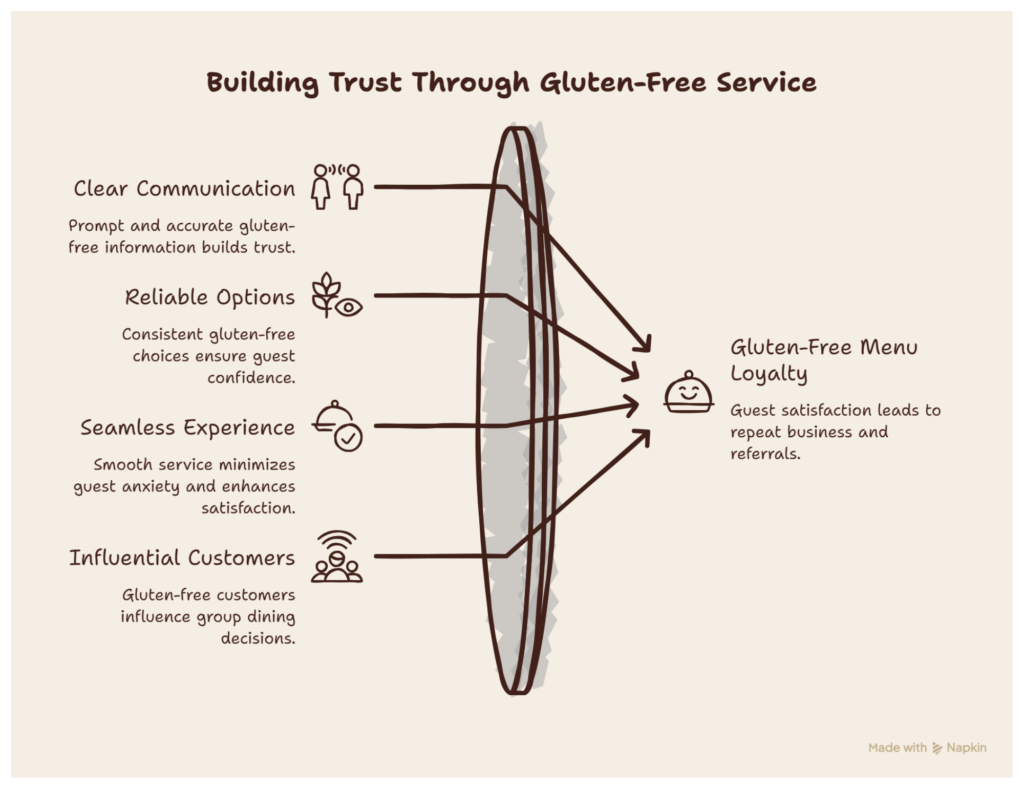
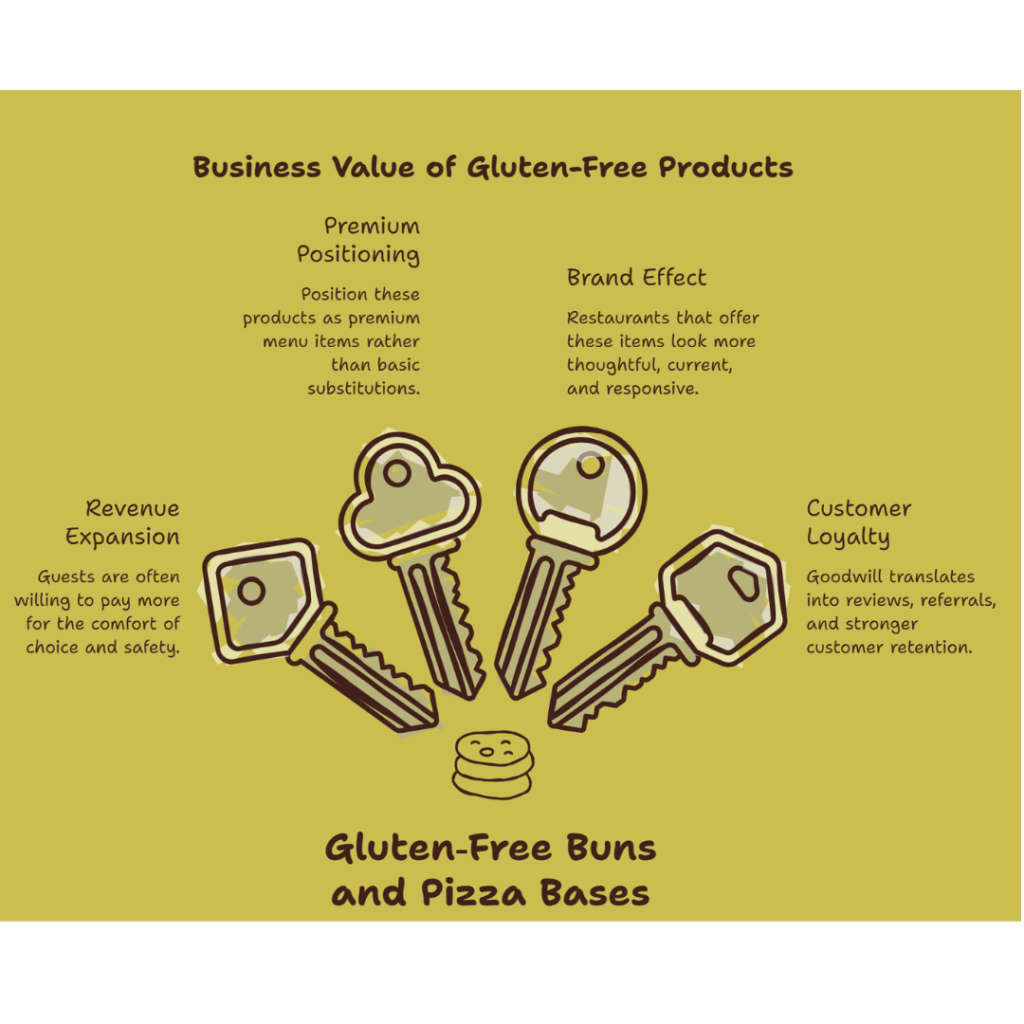
Gluten-Free Menu Loyalty begins with a small moment: a guest asks, “Do you have a gluten-free option?” Your team answers clearly, the menu has a reliable choice, and the meal arrives without uncertainty. For many HoReCa operators, that may sound like a small service detail. For the guest, it can decide where their friends, family

Small Segment, Big Impact : How Gluten-Free Options Create Loyal Brand Advocates Read More »

Gluten-Free Bread Wastage: Keep It Under Control

Winning Against Wastage : Pack Formats, Forecasting and Menu Design for Gluten-Free Breads

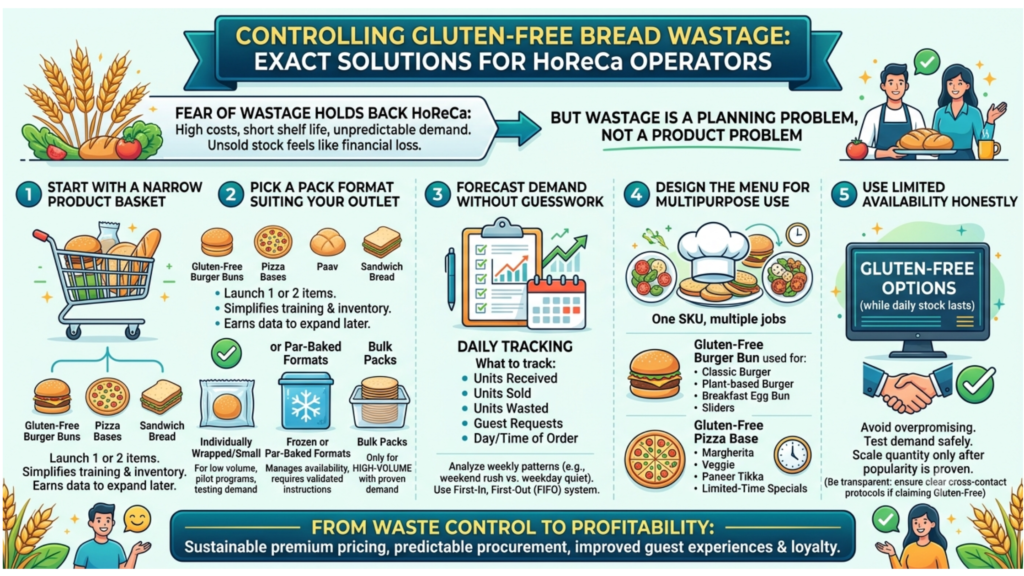
Gluten-Free Bread Wastage is the fear that stops many HoReCa operators from adding gluten-free buns, paav, wraps, sandwich breads or pizza bases to the menu. The concern is understandable. Gluten-free products may have a higher procurement cost, a shorter usable life in certain formats, and demand that appears unpredictable in the beginning. An unsold pack

Winning Against Wastage : Pack Formats, Forecasting and Menu Design for Gluten-Free Breads Read More »

Gluten-Free Bakery Pricing Without Guest Pushback

Pricing Strategy for Gluten-Free Bakery in HoReCa : How to Protect Margins and Keep Guests Happy

Gluten-Free Bakery Pricing is where many HoReCa operators become cautious. A gluten-free burger bun, pizza base, wrap or paav usually costs more than its regular wheat-based counterpart. The easy reaction is either to absorb the entire cost or add a surcharge so large that guests feel punished for their dietary needs. Neither approach is good

Pricing Strategy for Gluten-Free Bakery in HoReCa : How to Protect Margins and Keep Guests Happy Read More »

90‑day gluten‑free pilot

A 90‑Day Pilot Plan : Step‑by‑Step Roadmap for HoReCa Owners to Test Gluten‑Free Breads Safely

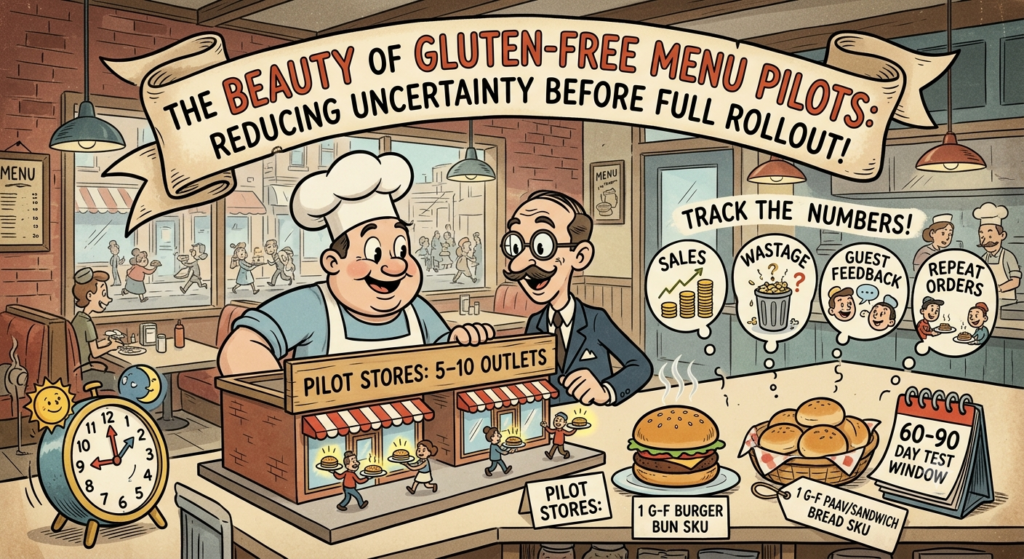
Introducing gluten-free products into a restaurant or café does not have to be a leap of faith. For many HoReCa operators, the smartest way forward is a structured 90‑Day Gluten‑Free Pilot. It allows you to test demand, evaluate operations, and measure commercial results before making a larger commitment. This is especially useful for outlets that

A 90‑Day Pilot Plan : Step‑by‑Step Roadmap for HoReCa Owners to Test Gluten‑Free Breads Safely Read More »

gluten free buns and pizza bases

Gluten‑Free Buns and Pizza Bases Without Kitchen Chaos

For many HoReCa operators, the idea of adding gluten-free menu items sounds useful but complicated. The usual concern is clear: “Will this slow down my kitchen?” The answer is no — not if the product choice, handling process, and menu design are practical. Gluten‑Free Buns and Pizza Bases can be introduced without turning your kitchen

Gluten‑Free Buns and Pizza Bases Without Kitchen Chaos Read More »

gluten-free menu pilots

From Reluctance to Results – Why Established Chains Hesitate on Gluten-Free and How Pilots De-Risk the Decision

For many established HoReCa chains, gluten-free menu options are still treated as a “nice to have” rather than a revenue opportunity. The common response is familiar: the demand is too small, the menu is already crowded, and the operational risk may not be worth it. Yet this hesitation often causes chains to overlook a valuable

From Reluctance to Results – Why Established Chains Hesitate on Gluten-Free and How Pilots De-Risk the Decision Read More »

Gluten-free paav : Safer Street‑Style Menus That Sell

Gluten‑Free Paav : Making Indian Street‑Style Menus Safer Without Losing Authentic Flavour

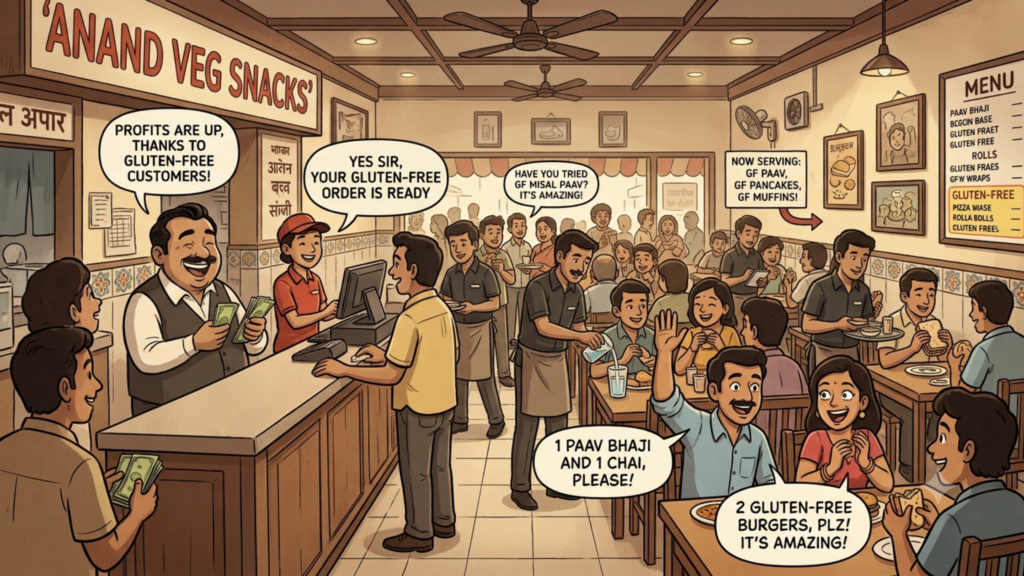
Paav bhaaji is one of those dishes that can make almost anyone forgive a bad day. It is warm, familiar, messy in the best way, and deeply Indian. But for celiac and gluten-sensitive guests, the same dish can feel like a locked door. That is exactly where gluten‑free paav steps in — not as a

Gluten‑Free Paav : Making Indian Street‑Style Menus Safer Without Losing Authentic Flavour Read More »

Gluten‑Sensitive and Health‑Conscious Customers

The Guest You’re Ignoring – And Why It Matters

“Gluten‑Sensitive and Health‑Conscious Customers in Indian HoReCa” represent a small but powerful segment that many outlets still ignore. This is the guest who quietly asks, “Do you have gluten‑free bread?” and then falls silent when the answer is no. They may not complain openly, but they decide where the group eats next time, and they

The Guest You’re Ignoring – And Why It Matters Read More »

hidden revenue in gf burger buns

Hidden Revenue Potential: How Gluten-Free Burger Buns Attract High-Value, Health-Conscious Guests

Gluten-free burger buns are no longer a niche offering—they are quickly becoming a strategic revenue driver for modern HoReCa businesses. As customer preferences evolve toward healthier, allergen-conscious, and lifestyle-driven choices, restaurants, cafés, and QSRs that adapt early are seeing measurable gains in footfall, ticket size, and brand perception. (Source: Mordor Intelligence) If you are in

Hidden Revenue Potential: How Gluten-Free Burger Buns Attract High-Value, Health-Conscious Guests Read More »

Gluten-Free Diet for Indian Families

Gluten-Free Diet for Indian Families: Benefits & Basics

Gluten-Free diet for Indian families is becoming increasingly relevant as more people focus on healthy eating and lifestyle diseases. Whether it is diabetes, gluten intolerance, or simple weight management, understanding gluten-free food choices can help families make better daily decisions. What Does Gluten-Free Mean? A Gluten-Free diet begins with understanding gluten. Gluten is a protein

Gluten-Free Diet for Indian Families: Benefits & Basics Read More »

Sourcing agent's role in MSME growth and international trade

Sourcing Agent’s role in MSME Growth and International Trade

Today, Indian MSMEs contribute ~45–48% of total exports. In this evolving landscape of global trade, sourcing agent’s role in MSME growth and international trade also plays very important role. The sourcing agents have emerged as critical enablers bridging fragmented MSME ecosystems with structured international markets. Their contribution extends far beyond transactional facilitation— A sourcing agent

Sourcing Agent’s role in MSME Growth and International Trade Read More »